
If you’ve ever felt overwhelmed by clutter but couldn’t quite figure out where to start, you’re not alone. Enter Marie Kondo, the Japanese organizing consultant who turned tidying into a global phenomenon with a simple question: “Does it spark joy?”
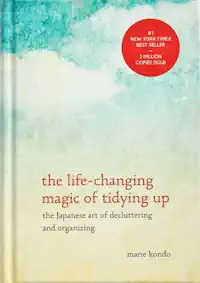 Her book “The Life-Changing Magic of Tidying Up” became a New York Times bestseller and has been called one of the most influential books of the decade by CNN. In 2019, her Netflix series “Tidying Up with Marie Kondo” launched on January 1st, following her as she visited families to help them organize and tidy their homes. The show sparked a massive decluttering movement, with charity shops reporting donation increases of 10-20% nationwide.
But what makes the KonMari Method different from every other organizing system out there? Let’s break it down.
Who Is Marie Kondo?
Marie Kondo is a tidying expert who began her organizing consultant business as a 19-year-old university student in Tokyo. She spent more than half her life helping people transform their cluttered homes into tidy reflections of their ideal lives, and her professional services became so popular in Japan that people waited three months just to get an appointment.
She’s been featured on more than fifty major television and radio programs, appeared in The New York Times, The Wall Street Journal, Vogue, and was listed as one of Time magazine’s 100 most influential people. Not bad for someone whose entire career revolves around helping people throw stuff away.
What Is the KonMari Method?
The KonMari Method is a simple but effective organizing system that uses a transformative criterion: choosing what sparks joy. It’s about tidying up in a way that will change your life forever, not just making your house look neat for visitors.
Unlike most methods that advocate a room-by-room or little-by-little approach that doom you to pick away at your piles of stuff forever, the KonMari Method uses a revolutionary category-by-category system that leads to lasting results. In fact, Kondo claims that none of her clients have ever relapsed into clutter.
The Six Rules of Tidying
The KonMari Method follows six fundamental rules: imagine your ideal lifestyle, commit yourself to tidying in one go, tidy by category, not by location, follow the right order (clothes, books, papers, komono, and sentimental items), finish discarding first, and ask yourself if each item sparks joy.
1. Imagine Your Ideal Lifestyle
Before you begin, think about what kind of house you want to live in and how you want to live in it. You can sketch it out, describe it in a notebook, or cut out photos from magazines. When you imagine your ideal lifestyle, you’re really clarifying why you want to tidy and envisioning your best life.
2. Commit to Tidying All at Once
The KonMari method is keen on taking care of the entire tidying process in one go. By doing this, it’s less likely for you to give in to old habits along the way, and you can spend all your time tidying in the right mindset. This doesn’t mean one literal day; it means one dedicated effort rather than endless maintenance.
3. Tidy by Category, Not Location
It might seem logical to tackle one shelf, closet, or room at a time, but tidying this way will doom you to a life of clutter. People often store the same type of item in more than one place. When you tidy each place separately, you’re repeating the same work in many locations and can never grasp the overall volume of each type of thing you own.

4. Follow the Right Order
The order in which you tidy is crucial: clothes, books, papers, komono (miscellany), and sentimental items. This order has proven to be the most efficient and effective. By starting with clothes (relatively easy) and ending with sentimental items (challenging), you hone your decision-making skills as you go.
5. Finish Discarding First
Before you even think about organizing or buying storage containers, you need to finish deciding what to keep and what to discard. This prevents you from organizing things you don’t actually need.
6. Ask “Does This Spark Joy?”
The most distinctive aspect of the KonMari Method is the focus on joy. Holding each item and assessing whether it elicits happiness helps determine what to keep and what to let go. Rather than discarding items carelessly, Marie Kondo suggests expressing gratitude for their service before letting them go, fostering a mindset of appreciation and mindfulness.
The Famous “Spark Joy” Test
When you pick up an item, do you feel good about it? Most people feel it around their sternum. If you hold the item and feel a constriction or weight there, you’re likely ready to part with it.
The key is being honest about your emotional response, not justifying why you should keep something. Don’t focus on how much you paid for an item or whether it was a gift; focus on whether it genuinely makes you happy right now. If you’re holding onto something out of guilt or obligation rather than joy, it’s okay to let it go.
The KonMari Folding Method
One of Kondo’s most recognizable techniques is her specific folding method. She recommends folding clothes and packing them vertically so you can see everything at a glance, and suggests putting folded clothes into organizing cubes. Clothes are folded into rectangles that can stand upright in drawers, making it easy to see every item you own.

What Happened After Netflix?
The show’s impact was immediate and dramatic. In the immediate wake of the show’s release, charity shops saw significant increases in donations. Goodwill stores in the Washington D.C. area reported donations up by 66% for the first week of January, an effect attributed to the show encouraging people to tidy their houses.
According to Google Trends, search terms for “konmari method” and “Marie Kondo” spiked on January 1, 2019, when the Netflix show launched. The new numbers completely obliterated the original stats from when her book was released in 2014.
The Benefits Beyond a Clean House
The KonMari Method isn’t just about having a tidy home. It creates a more peaceful and organized living space, reduces decision fatigue in daily life, and helps you identify what’s truly important to you, not only what physical belongings you truly cherish, but what is sparking joy in life overall.
Research suggests that clean, organized environments have a variety of psychologically beneficial effects, such as clearer thought processes, increased confidence, and improved abilities. An untidy environment can negatively impact many aspects of human health, such as mood and stress levels, memory capabilities, and even the ability to process other people’s facial expressions.
The benefits include reduced stress and anxiety, enhanced decision-making skills, encouragement toward minimalism, and improved home aesthetic and functionality that enhances daily routines and overall well-being.
Marie Kondo Today
In 2024, Kondo expanded her business by leading retreats for professional organizers in Japan, visiting cities like Tokyo, Kyoto, and Nara. In January 2025, she launched The KonMari Club, a year-long guided self-improvement program offering coaching sessions, monthly workshops, and a community space for members.
She also continues to share tips on Instagram, posting content like packing guides and kitchen organization tips, maintaining an engaged community where fans share their own decluttering experiences.

Common Criticisms and Limitations
Not everyone is sold on the KonMari Method. Some critics point out that:
- The “spark joy” concept can be confusing for practical items like toilet plungers
- The method can be time-intensive, especially for families with children
- Kondo says to avoid letting your family be included in the tidying process unless you’re deciding whether to discard one of their personal items, which can be unrealistic for shared spaces
- Some find the spiritual elements (like thanking objects before discarding them) a bit too much
While the KonMari Method is highly effective, it may not suit everyone. Some people need different approaches, and that’s okay.
Getting Started With KonMari
Ready to try the method yourself? Here’s how to begin:
- Visualize your ideal life – Spend time thinking about how you want your home to feel
- Start with clothes – Gather every piece of clothing from your entire house into one spot
- Hold each item – Physically touch each piece and ask if it sparks joy
- Thank items before discarding – Express gratitude before letting things go
- Find a place for everything you keep – Only after discarding should you organize what remains
- Move through categories systematically – Don’t skip ahead to sentimental items until you’ve practiced with easier categories
Why It Works
The tidying process represents a turning point. When you put your house in order using the KonMari Method, you have no choice but to listen to your inner voice, because the question of what you want to own is actually the question of how you want to live your life.
As Kondo herself writes, tidying is a way of taking stock that shows us what we really like. Our possessions very accurately relate the history of the decisions we have made in life.

The KonMari Method isn’t magic in the supernatural sense, but it does have a transformative quality. By forcing you to confront every single possession and make intentional decisions about what stays in your life, you’re not just organizing your stuff; you’re clarifying your values and priorities.
And unlike other organizing methods that require constant maintenance, Kondo promises that if you follow her method properly, you’ll never revert to clutter again. Thousands of devoted followers around the world suggest she might be onto something.